MNI INTERVIEW: UK Consumer Sentiment Off Lows, Headwinds Build

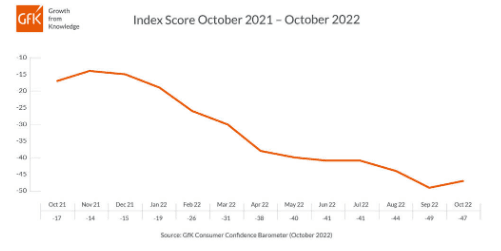
UK consumer confidence may have bottomed out in October, with some early signs of improved household sentiment, but the headline index remains close to historic lows and there are still tremendous headwinds to overcome, the head of the GfK monthly survey told MNI.
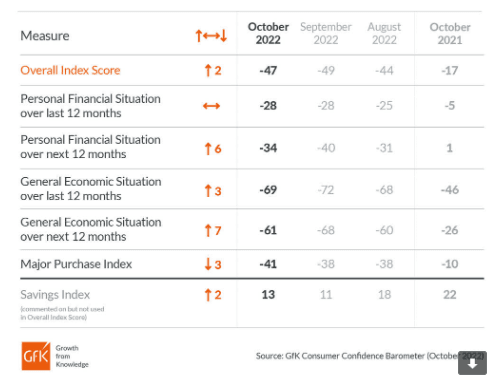
GfK's Overall Index rose to -47 in October from the record low -49 seen last month, although all the core measures remain severely depressed.
Although financial conditions looked brighter for the coming 12 months, consumers still face inflation at 40-year highs and the likelihood of rising housing costs in coming months. The index for personal finances over the next 12 months rose 6 points to -34; still 35 points lower than a year ago.
"Households are not just running scared of burgeoning energy and food prices, and the prospect of further base rate rises increasing mortgage costs," Joe Staton, GfK's Client Strategy Director said Thursday.
Now, they are facing the "likelihood of tax rises and even austerity measures," and any recovery could be quickly nipped in the bud, Staton said.
"The negative environment will deflate future spending plans, and cautious consumers could easily slow the UK economy still further. Consumers, like governments, are just as capable of U-turns, and today’s economic headwinds indicate a long, hard winter.”
Staton noted that consumers may have been mildly buoyed by the governent's energy price plan announced in late September, which was reflected in the slightly improved outlooks for the personal financial situation, although he highlighted the survey was conducted before the reversal of many parts of that month's "mini-budget", which would likely dampen sentiment.
HOPEFUL
The resignation of Prime Minister Liz Truss could help improve the outlook in November, Staton said, though the outcome of the Conservative Party leadership race to find her successor and the government's subsequent fiscal course remain unknown.
Even then, he said, the struggles of households in meeting their rising bills month to month will soon feed back into sentiment indicators.
With no sign of a strong pick-up in household spending, Staton said retailers would be downhearted to see a further slowdown in the Major Purchase Index. Staton said the fall in the purchase indicator is especially worrying for the final quarter of the year, which many businesses rely on to strengthen their balance sheets.
The Major Purchase Index fell 3 points to -41; 31 points lower than last October.